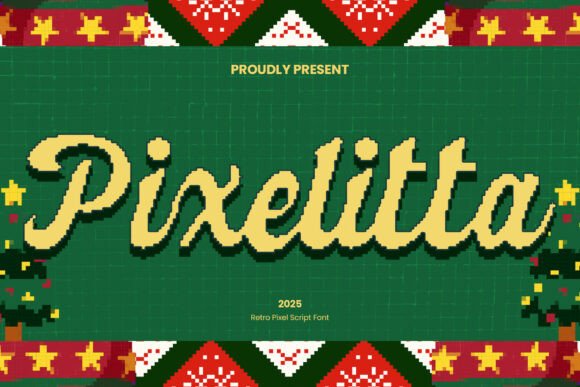
Pixelitta: Crafting Cozy Retro Holiday Design
There is a specific kind of warmth found in the blocky graphics of early computer games and the pixelated holiday cards of the 1990s. It is a blend of digital nostalgia and handcrafted charm. Pixelitta is a premium font that taps directly into this feeling. As a retro pixel script typeface, it does not simply mimic old technology; it translates the fluidity of a handwritten font into the structured, blocky precision of 8-bit art. For designers and creative professionals, this typeface offers a bridge between the playful energy of pixel art and the inviting personality of a script font.
The Visual Language of Pixelita
At its core, Pixelitta is a study in contradiction that somehow results in harmony. We are accustomed to seeing script fonts defined by smooth Bezier curves and calligraphic strokes. Conversely, pixel fonts are rigid, relying on a grid system. Pixelitta merges these two worlds. The letterforms maintain the connectivity and flow of a traditional handwritten font, yet every curve is resolved into distinct, blocky pixels. This creates a visual texture that feels tactile and substantial.
The personality of the typeface is unapologetically cheerful. It evokes the era of 8-bit consoles and festive winter scenes without looking dated. The characters are designed with a generous baseline and visible "stepping" on the curves, which gives the text a rhythmic, bouncy quality. When you look closely at the letterforms, you can see the intentional placement of each pixel to suggest the thick and thin strokes of a pen. This attention to detail ensures that the font remains legible at various sizes while retaining its unique digital footprint. It is the kind of design asset that immediately sets a specific mood—cozy, vintage, and full of personality.
Practical Applications for Modern Projects
While the aesthetic is retro, the utility of Pixelitta is thoroughly modern. Its strength lies in display typography, where it can command attention without feeling aggressive. For marketers and entrepreneurs, this font is a powerful tool for seasonal branding. During the holiday season, brands often struggle to stand out in a sea of generic red and green. Using a pixel-style script font allows for differentiation. It works exceptionally well for Christmas campaigns, holiday posters, and festive packaging design where a "retro gaming" or "vintage digital" theme is desired.
Consider the following areas where Pixelitta shines:
- Greeting Cards and Stationery: The font’s inherent warmth makes it perfect for the stationery market. It mimics the look of cross-stitch or pixel art projects, appealing to crafters and hobbyists who appreciate handmade aesthetics.
- Web Design and Social Media: In the realm of digital design, Pixelitta serves as an excellent hero font for headers on landing pages or as bold text overlays on social media graphics. Its distinct shape ensures high engagement rates, particularly in lifestyle, gaming, or vintage-themed content.
- Logo Design and Brand Identity: For small business owners in the creative space—such as indie game developers, retro bakeries, or artisan crafters—this typeface offers a distinct voice. It signals a brand identity that is fun, approachable, and detail-oriented.
- Merchandise: The font translates well to physical goods. On tote bags, t-shirts, or mugs, the pixelated script holds its shape and reads clearly, offering a trendy, streetwear-adjacent vibe.
Strategic Typography: Integrating Pixelita into Your Workflow
Choosing a display font like Pixelitta requires more than just liking the style; it requires an understanding of how it functions within a larger typographic system. One of the most common pitfalls in design is using a decorative font for body copy. Pixelitta is a display font, meaning it is designed for impact at larger sizes. Attempting to use it for long paragraphs would result in poor readability and visual fatigue.
Instead, the most effective strategy is to use Pixelitta for headlines, subheadings, and calls to action. To create a balanced visual hierarchy, pair it with a clean sans serif font or a simple serif font for your body text. For example, pairing the whimsical, retro energy of Pixelitta with a geometric sans serif like Montserrat or a classic serif like Garamond can create a sophisticated contrast. This allows the pixel script to provide the personality while the secondary font provides clarity and legibility for longer reads.
Evaluating Fit and Readability
When evaluating if Pixelitta fits your project, context is key. Ask yourself if the "retro" or "8-bit" aesthetic aligns with the message you are trying to convey. If you are designing a corporate law firm's annual report, this is likely not the right choice. However, if you are working on a lifestyle blog, a holiday marketing campaign, or a creative portfolio, it can be the missing piece that ties the visual language together.
Readability considerations also extend to color and background. Because Pixelitta has a distinct texture, it performs best on solid, contrasting backgrounds. Avoid placing it over busy photographs or complex patterns where the pixel edges might get lost. High contrast is your friend here. Ensure that the "kerning" (the space between letters) feels balanced. While the font comes with pre-set spacing, you may need to adjust tracking slightly depending on the size you are using to ensure the script connects fluidly without overlapping awkwardly.
The Professional Edge: Licensing and Versatility
For professional designers and commercial users, the technical specifications of a font are just as important as its look. Pixelitta is designed as a commercial font, which typically implies a level of polish and testing that free fonts often lack. When incorporating it into client work, it is vital to ensure you have the correct license for the project's scope, whether it is for a single logo or a mass-produced merchandise line.
The font includes uppercase, lowercase, and numerals, providing a comprehensive character set for most English-language design needs. This versatility allows for the creation of complex compositions that don't feel repetitive. You can mix uppercase initials with lowercase script to create dynamic logos or pair numerals with text for event dates on posters.
Ultimately, Pixelitta is more than just a collection of pixels; it is a design solution for anyone looking to inject a dose of nostalgia and cheer into their work. It bridges the gap between the digital and the handwritten, offering a playful yet professional tool for modern typography. Whether you are a content creator looking to refresh your thumbnails or a brand strategist aiming to evoke a specific vintage mood, this retro pixel script font provides the character and quality needed to make your designs memorable.